After reading this current page, click on the next page we recommend here, or at the bottom of this page.
Life’s journey isn’t always smooth and everyone encounters tough periods. Navigating these complexities may not always be intuitive, and that’s where therapy can serve as a valuable tool.
There are many reasons why counseling is important. Therapy offers a supportive environment in which people can manage and overcome the burdens of trauma, anxiety, depression, or feelings of disconnection from social or professional life. It’s also a refuge for those grappling with a lack of direction, diminished joy in daily activities, substance abuse, anger management issues, or the grief of losing a loved one.
Engaging with a skilled therapist provides a space to unpack and better understand your thoughts and emotions, offering clarity on why you might feel or think in certain ways. Read on to learn more about the benefits of therapy for mental health.
Why Counseling Is Important
Counseling is a form of talk therapy that provides a safe and confidential setting for people to confront and work through personal challenges and emotional difficulties. Counseling serves different purposes for different people, but it’s often pursued to effect change and personal growth, or to gain deeper insights into mental and emotional states.
Therapists or counselors act as facilitators rather than directors. They don’t prescribe solutions but rather guide people to articulate their concerns. This process helps to unearth underlying causes and patterns of thought. From there, a collaborative effort can lead to the development of strategies for resolution or coping mechanisms to better handle life’s complexities.
Benefits of Counseling
Benefits of counseling are manifold and can impact all aspects of life.
Opportunity for self-exploration and self-discovery
Among the main benefits of counseling for mental health is the way it enables people to better understand their inner selves, values, and beliefs. This process fosters self-awareness, which is crucial when making meaningful changes in life and embarking on a path of self-growth.
Provides support and validation
Another advantage of seeing a therapist is that the counseling environment is designed to be safe and affirming, allowing for open discussion without fear of judgment. Counselors offer empathy, positive regard, and authenticity, creating a supportive space where your feelings and experiences are acknowledged and validated.
Assists in change of self-defeating behaviors and habits
Counseling can illuminate self-defeating patterns, providing clarity on the cyclical thoughts and behaviors that often undermine well-being. Through this awareness, counseling guides you in taking decisive steps towards positive behavioral changes and regaining control.
Enhancement of self-esteem and greater self-acceptance
Counseling can be an effective tool in overcoming insecurities and promoting a more compassionate self-view. It encourages the acceptance of imperfections as part of the human experience, leading to improved self-esteem and self-love.
Guidance in finding purpose
Counseling can be a compass for those searching for a deeper meaning in life, especially during periods of crisis or loss. It helps in rediscovering personal passions and defining individual life purposes through the exploration of personal values and experiences.
Better expression and management of emotions
Therapy benefits include the provision of strategies for recognizing, articulating, and regulating emotions effectively. This is especially beneficial for managing stress, anxiety, and other intense emotions, promoting healthier emotional responses and coping mechanisms.
Provides a safe outlet to vent about issues
A therapeutic setting offers a confidential and non-judgmental space to freely express concerns and emotions. This outlet is ideal for releasing accumulated stress and can help prevent the build-up of negative feelings that could otherwise lead to emotional overflow.
Fostering hope, motivation, and encouragement
Counseling can rekindle hope and motivation even in times of deep hopelessness, by highlighting past successes and current strengths to build a positive outlook toward the future.
Learning effective skills for life
Counseling is a practical avenue for acquiring and refining life skills – communication, problem-solving, and conflict resolution, for instance. It allows for the safe practice of these skills, which contributes to overall wellness and life satisfaction.
Improved communication and interpersonal skills
Counseling enhances your ability to communicate and connect with others, leading to stronger relationships and a better understanding of social dynamics, which is beneficial in all areas of life.
How Does Therapy Help Mental Health?
Therapy aids mental health by offering a structured and supportive environment where individuals can express themselves openly and work through their emotional and psychological challenges. It enables the exploration and modification of thought patterns and behaviors that contribute to mental distress.
Additionally, therapy provides people with coping mechanisms and strategies for dealing with difficult situations, prompting improved well-being and functioning. It also helps to validate a person’s experiences and engenders resilience, often resulting in a greater sense of control and empowerment in life.
FAQs
What are the benefits of mental health counseling?
Mental health counseling provides a safe and supportive environment to explore personal challenges, learn coping strategies, and work toward emotional well-being. It can help people gain a better understanding of themselves and others, improve communication skills, and increase self-esteem.
What are the benefits of grief counseling?
Grief counseling offers a compassionate space to process the complex emotions associated with loss, facilitating a healthy grieving process. It can help people find meaning after a loss and develop strategies for adjusting to life changes and continuing personal growth.
What are the benefits of family counseling?
Family counseling helps family members improve communication, resolve conflicts, and understand family dynamics. It strengthens relationships by promoting a better understanding of individual needs and collective family goals.
What are the benefits of individual counseling?
Individual counseling offers a personalized approach to mental health care, allowing people to work one-on-one with a counselor to address specific issues. It can lead to increased self-awareness, personal empowerment, and the development of effective strategies for managing life’s challenges.
Get Counseling for Mental Health at Connections
Engaging in counseling and therapy that is grounded in compassion and scientific principles can be a transformative step for anyone experiencing psychological challenges. By focusing on personal well-being and improved functionality, these methods offer a workable path toward healing.
To foster a nurturing environment, our approach prioritizes personalized care. With a small group setting, each person is assured comprehensive attention while also benefiting from the dynamic support of peers.
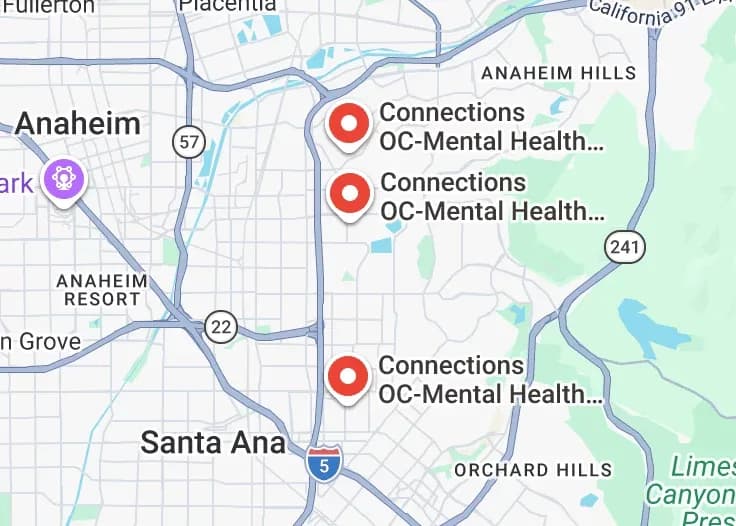
Our dedicated professionals are committed to guiding you through a well-structured program, integrating counseling and various therapeutic modalities tailored to your needs. The fusion of talk therapies, motivational techniques, and holistic strategies provides a well-rounded treatment experience at Connections Mental Health. Call Connections today at 844-759-0999 and discover how to engage with effective mental health treatment in Southern California.
What types of mental health programs are available in Orange County?
Mental health programs near Orange County offer a full continuum of care, including inpatient treatment, partial hospitalization (PHP), intensive outpatient (IOP), and standard outpatient (OP) services. Whether you’re looking for structured care or flexible support, mental health treatment programs are designed to meet a range of needs.
How do I know if I need mental health treatment near Orange County?
If you’re experiencing persistent feelings of anxiety, depression, stress, mood changes, difficulty coping with daily responsibilities, or emotional challenges that are affecting your work, relationships, or overall well-being, it may be time to seek professional support. A mental health assessment can help determine the level of care that’s right for you and connect you with the appropriate treatment options.
What mental health conditions are treated at Orange County mental health centers?
Mental health treatment centers in Orange County commonly provide care for conditions such as anxiety disorders, depression, bipolar disorder, PTSD, trauma-related disorders, OCD, mood disorders, and other emotional or behavioral health concerns. Treatment plans are personalized to each individual’s unique needs, goals, and clinical recommendations.
Will my insurance cover mental health treatment in Orange County?
Many major insurance providers offer coverage for mental health services, including partial hospitalization (PHP), intensive outpatient (IOP), and outpatient treatment programs. Coverage varies by plan, so verifying your benefits with the treatment center can help you understand your available options and any potential out-of-pocket costs.