
Finding Relief from Obsessive Compulsive Disorder (OCD): Signs, Symptoms, & Treatment
individuals worldwide are affected by OCD
Obsessive-compulsive disorder (OCD) affects tens of millions of people worldwide, yet many suffer in silence. Not because help is unavailable, but because the experience itself can be confusing, isolating, and totally misunderstood.
Society may make us think that having OCD means being very “organized” or “particular.” Rather, it involves living with anxious, intrusive thoughts that feel impossible to shut off.
If you or a loved one is struggling and searching for OCD treatment in Orange County, compassionate, proven, evidence-based treatment and care are available.
What Obsessive-Compulsive Disorder Really Feels Like
According to the National Library of Medicine, obsessive-compulsive disorder is a chronic mental health condition and part of a broader group of anxiety disorders.
At its core, it creates a loop of:
- Unwanted, distressing thoughts or mental images
- Intense anxiety or fear tied to those thoughts
- Repetitive behaviors or mental rituals meant to reduce the fear
- Temporary relief, followed by the thoughts returning
Thoughts arrive suddenly and demand attention, even when the person desperately wants to ignore them.
The anxiety can feel urgent, convincing, and relentless.
Over time, people may begin organizing their day around rituals, reassurance-seeking, or avoidance, simply to function.
These cycles can take hours each day and begin to interfere with relationships, work, school, and overall
quality of life.
Signs of OCD
Signs of OCD can manifest in various ways and may differ from person to person. An awareness of these signs can alert you to the possibility of OCD and help you to seek appropriate support and treatment. Here are some common signs of OCD:
People with OCD experience intrusive and distressing thoughts, images, or urges that repeatedly enter their minds. These thoughts are often unwanted and go against their values or beliefs.
Individuals with OCD engage in compulsive behaviors or to alleviate the anxiety caused by their obsessions. These compulsions can become time-consuming and interfere with daily functioning.
Some individuals with OCD have an intense fear of germs or contamination, leading to excessive handwashing, cleaning, or avoiding certain places or objects.
People with OCD may have an overwhelming need to check things repeatedly, such as ensuring doors are locked or appliances are turned off, even when there is no real reason to doubt their actions.
OCD can be characterized by an obsession with symmetry, exactness, or arranging objects in a specific order.
Some individuals with OCD may compulsively collect and hoard items that others see as useless or excessive.
In addition to thoughts, individuals with OCD may experience distressing mental images or impulses that are difficult to control.
OCD can also involve mental rituals, such as silently repeating certain phrases or prayers to prevent harm or bad luck.
People with OCD may avoid situations, places, or people that trigger their obsessions, which can lead to social isolation and difficulties in daily life.
Those with OCD often experience overwhelming guilt or shame related to their intrusive thoughts or behaviors.
Having occasional intrusive thoughts or engaging in repetitive behaviors does not necessarily indicate OCD.
The key is the severity and impact of these thoughts and actions on a person’s life.
If you or someone you know is experiencing persistent and distressing signs of OCD, seeking professional help from a mental health expert will enable proper diagnosis and treatment.
Early intervention and appropriate care can significantly improve the quality of life for individuals living with OCD.
Symptoms of OCD - What Mental Health Professionals Look For
The symptoms of OCD are defined in DSM-5-TR (the latest edition of Diagnostic and Statistical Manual of Mental Disorders, a widely used guide for mental health professionals). To receive a diagnosis of OCD, an individual must experience the following OCD symptoms:
- Persistent obsessions that cause significant distress
- Compulsive behaviors or mental acts performed to reduce anxiety
- Symptoms lasting more than an hour per day or severely disrupting life
- Awareness that the thoughts or rituals are excessive or unreasonable
- Symptoms not better explained by other mental health disorders
Only a qualified clinician can diagnose obsessive-compulsive disorder, but recognizing these patterns is often the first step toward effective treatment.
Obsessions are recurrent and intrusive thoughts, urges, or images that cause distress. These thoughts are not merely excessive worries about real-life problems, and the person attempts to ignore or suppress them with limited success.
Compulsions are repetitive mental acts or behaviors that the person feels compelled to perform in response to the obsessions. These actions are aimed at reducing the distress caused by the obsessions or preventing a feared event or situation. However, the compulsions are not connected to the event in a realistic way or are clearly excessive.
The obsessions and compulsions take up a significant amount of time – more than one hour per day – or cause significant distress or impairment in daily functioning, social activities, or personal and professional responsibilities
The obsessions and compulsions are not attributed to the physiological effects of a substance or another medical condition.
The person may have good or fair insight into the excessive or unreasonable nature of their obsessions and compulsions. This means they recognize that their beliefs and behaviors are not based on actual threats.
The symptoms of OCD are not better explained by another mental disorder.
If you or someone you know is experiencing symptoms that may be consistent with OCD, seeking help from a mental health specialist is essential. Early intervention and appropriate treatment can lead to effective management and improved quality of life for individuals with OCD.
If you have been feeling any of these symptoms, and you are in need of help, please give our friendly team a call.
Treatment for OCD That Works
From psychotherapy to OCD medication and other complementary therapies, here’s an overview of the OCD treatment modalities that can help you or your loved one navigate the journey towards healing and recovery – this may include medications for OCD.
Psychotherapy is the foundation of care. Cognitive behavioral therapy is widely recognized as one of the most effective interventions. Within CBT, exposure and response prevention is considered the gold standard.
ERP gently and gradually helps individuals face feared thoughts or situations while learning not to engage in compulsive behaviors. Over time, the brain learns that anxiety can rise and fall on its own.
Other approaches may include:
- Acceptance-based therapies
- Mindfulness-informed psychotherapy
- Group therapy for shared understanding and support
- Family therapists, when loved ones are involved in the recovery process
Medication can be helpful, particularly when symptoms are severe or long-standing. Selective serotonin reuptake inhibitors are commonly used as part of an evidence-based treatment plan.
Medication decisions are always made collaboratively and carefully, with close monitoring.
By working closely with a qualified healthcare professional, you can determine the right dosage and medication for OCD, as individual responses to medication can vary.
The obsessions and compulsions take up a significant amount of time – more than one hour per day – or cause significant distress or impairment in daily functioning, social activities, or personal and professional responsibilities.
Support groups can be a valuable resource for individuals with OCD, as they offer a sense of community, understanding, and validation.
Connecting with others who have similar experiences can help reduce feelings of isolation and provide a safe space to share challenges and successes. Support groups can be found in local communities or online, making it easier to access support regardless of your location.
The person may have good or fair insight Engaging in self-care practices and making positive lifestyle changes can contribute to managing OCD symptoms.
Prioritizing adequate sleep, maintaining a balanced diet, and engaging in regular physical activity can improve overall well-being and contribute to better mental health. Reducing stress and learning healthy coping mechanisms are also vital components of self-care for individuals with OCD.
OCD is a complex disorder, and treatment plans should be tailored to each individual’s unique needs. Seeking professional help from qualified mental health professionals, such as psychiatrists, psychologists, or licensed therapists, is crucial for effective treatment.
Healing is not limited to the therapy room. Many people benefit from complementary supports, including:
- Mindfulness and stress-reduction practices
- Movement-based therapies such as yoga
- Healthy routines that support sleep and nervous system regulation
- Peer support and shared experiences
When combined with anxiety treatment and clinical care, these tools can strengthen long-term recovery.
OCD FAQ
Living with OCD can be extremely challenging, as it involves dealing with intrusive thoughts and engaging in compulsive behaviors to alleviate anxiety, which can disrupt daily life and relationships.
The four main types of OCD are checking, contamination, intrusive thoughts, and hoarding. Each type involves specific obsessions and compulsions that people may experience.
What causes OCD? There is evidence to suggest that OCD has a genetic component, as it tends to run in families. However, genetics is not the sole cause, and environmental factors may also play a role in the development of OCD.
The 3 main symptoms of OCD are obsessions (unwanted and distressing thoughts), compulsions (repetitive behaviors or mental acts to reduce anxiety), and the significant interference of these obsessions and compulsions in daily life.
OCD Treatment in Orange County, California
Connections Mental Health provides specialized care for individuals seeking an OCD treatment center in Orange County and throughout Southern California. Our treatment center offers personalized, evidence-based care in a supportive and structured environment.
Our treatment program is built around:
- Proven clinical methods grounded in current psychiatric research
- Inpatient level of care, including referrals for outpatient aftercare and other intensive treatment options as needed
- Experienced mental health professionals available around the clock
- Group therapy and individualized psychotherapy
- Support for adults 18+
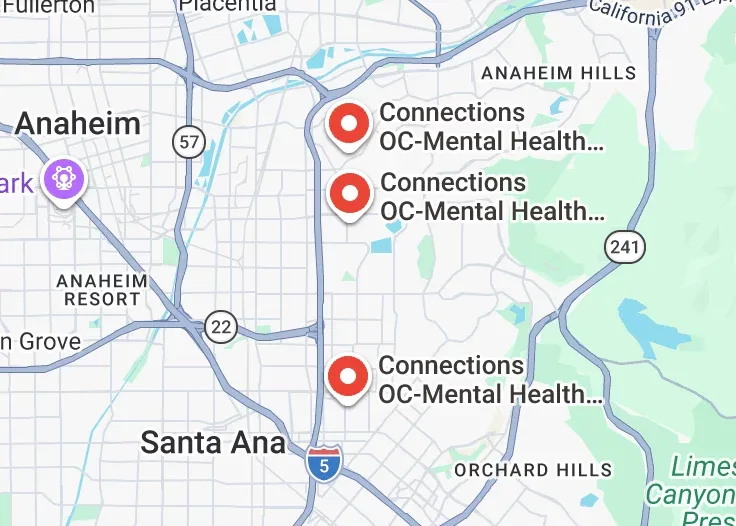
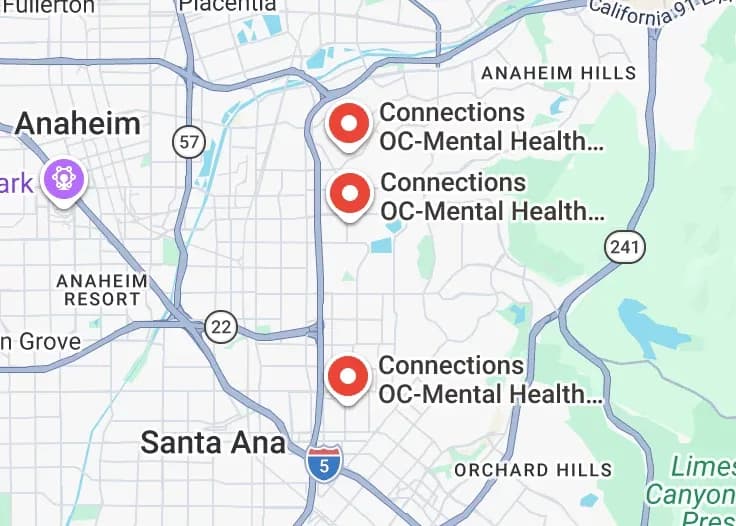
With locations accessible to Costa Mesa, Irvine, Newport Beach, Laguna Beach, and Lake Forest, our Orange County program is designed to meet people where they are.
We focus on the whole person, not just symptoms, helping you or your loved one rebuild daily functioning, confidence, and hope.
Choosing Connections Mental Health, you can access treatments that are evidence-based and grounded in the latest psychiatric science, with programs offering 24/7 supervision with at least two staff members present at all times to prioritize your safety and comfort.
Contact us our OCD treatment center in Orange County today at 844-759-0999 to explore our personalized treatment plans and embark on your journey to healing at Connections.