Connections Mental Health
About Us

About Us

Effective residential inpatient mental health treatment.

Get to know us
Who We Are
  • Staff
  • Our Facilities
Resources
  • Blog
  • FAQ
  • Insurance Verification
  • Reviews
Areas We Serve

Why I should relocate for rehab?

Menu CTA Image
Locations

Locations

Choose from our beautiful locations near beaches & national parks.

888-255-2112
California
  • Orange County
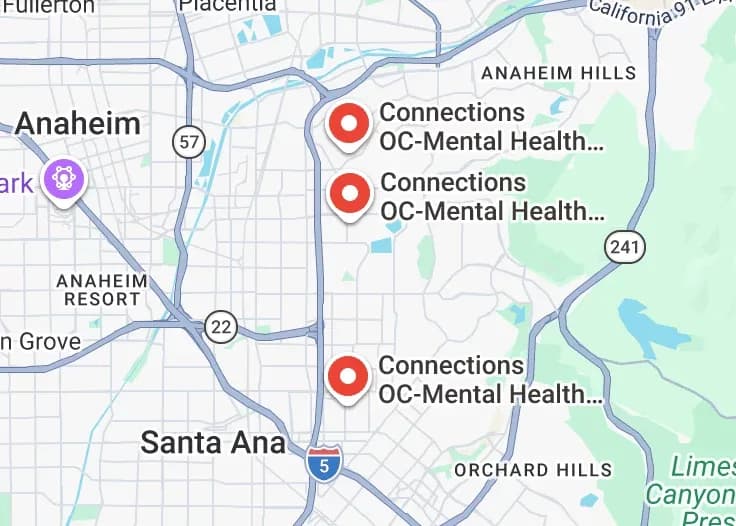
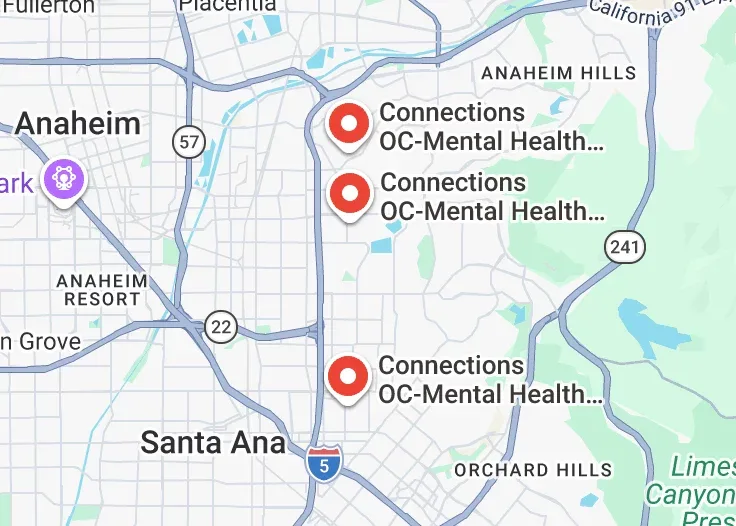
    Tustin, CATustin, CAVilla Park, CAVilla Park, CAOrange, CAOrange, CA
    Location Preview
Tustin, CATustin, CAVilla Park, CAVilla Park, CAOrange, CAOrange, CA
Location Preview
Tustin, CATustin, CAVilla Park, CAVilla Park, CAOrange, CAOrange, CA
Location Preview
Areas We Serve

Why I should relocate for rehab?

Menu CTA Image
Mental Health Disorders
Anxiety Disorders
  • Generalized Anxiety Disorder
  • Panic Disorder Treatment (MentalHealth National)
  • Obsessive Compulsive Disorder
  • Social Anxiety Disorder
  • Agoraphobia
Mood Disorders
  • Depression Treatment (MentalHealth National)
  • Bipolar Disorder
  • Premenstrual Dysphoric Disorder
  • Disruptive Mood Dysregulation Disorder
  • Major Depressive Disorder
  • Persistent Depressive Disorder
  • Seasonal Affective Disorder
Trauma Disorders
  • Post Traumatic Stress Disorder
  • Adjustment Disorder
Personality Disorders
  • Borderline Personality Disorder
  • Antisocial Personality Disorder
  • Dissociative Identity Disorder
  • Histrionic Personality Disorder
  • Paranoid Personality Disorder
Psychotic Disorders
  • Schizophrenia
  • Schizoaffective Disorder
Neurodevelopment Disorder Treatment (MentalHealth National)
  • ADHD
Areas We Serve

Why I should relocate for rehab?

Menu CTA Image
Mental Health Treatment

Mental Health Treatment

Get dual-diagnosis treatment for SUD and mental health

888-255-2112
  • Cognitive Behavioral TherapyCognitive Behavioral Therapy
  • Dialectical Behavioral TherapyDialectical Behavioral Therapy
  • Seeking Safety TreatmentSeeking Safety Treatment
  • Motivational Interviewing Therapy (MentalHealth National)Motivational Interviewing Therapy (MentalHealth National)
  • Medication ManagementMedication Management
Areas We Serve

Why I should relocate for rehab?

Menu CTA Image
Contact
844-759-0999
Connections Mental Health
844-759-0999
Skip to content

What to do on a Bad Mental Health Day

Picture of Written By:
Written By:

Matthew D'Ursov

Picture of Content Manager:
Content Manager:

Amy Leifeste

Picture of Editor:
Editor:

Karena Mathis

Posted On
February 12, 2024

Treatment Guidance Website Tour

After reading this current page, click on the next page we recommend here, or at the bottom of this page.

Dealing with stress, especially alongside symptoms of depression or anxiety, can be overwhelming. If you’re sensing that your stress levels are maxing out and you are having a bad day mentally, it might be time to step back and recalibrate with a mental health day.

A mental health day off provides a pause from your regular work or academic routine, allowing you to dial down obligations and get some breathing space. Having a bad mental health day is an opportunity to engage in stress relief, relaxation, and activities that bring you joy, helping to ward off burnout.

Although a single day away may not resolve deep-seated issues contributing to burnout, it can offer a valuable interval to rest, recenter, and return recharged with renewed energy and a clearer, more relaxed mindset.

Regardless of the stress that you’re under, these suggestions can help you make the most of a mental health day.

Bad Mental Health Day Tips

Choosing to take a mental health day is a significant step toward self-care. To ensure that you fully benefit from this time, here’s what to do on a bad mental health day:

  • Digital detox: Disconnecting from digital devices helps you engage more deeply with your mental health day. Temporarily stepping away from your phone, email, and social media will allow you to immerse yourself in the present and reduce digital distractions that may affect your well-being.
  • Commit to your decision: If you’ve scheduled a bad mental health day at work but face unexpected work demands, remember to prioritize your well-being. Uphold the commitment to your mental health day with your employer’s support, recognizing that no task is worth compromising your mental stability.
  • Mindful observation: Rather than having a bad mental health day at work, instead take this time to check in with yourself. Whether it’s during a nature walk or a quiet moment at home, observe your emotional and physical state. What shifts do you notice in your feelings and bodily sensations throughout the day?
  • Cultivate gratitude: Integrating gratitude into your day can profoundly impact your mental state. Reflect on the aspects of your life that you’re thankful for, whether they’re simple pleasures or significant relationships, and acknowledge their value.
  • Invest in mental fitness: Mental health is bolstered by mental fitness, just like physical health is by physical fitness. Consider how you can maintain mental resilience – perhaps by making mental health days a regular practice or engaging in activities that foster mental strength.

By incorporating these tips into your mental health day, you create a nurturing space for emotional and mental rejuvenation.

How to Get Through a Bad Mental Health Day

Here are ten actionable tips showing you how to deal with a bad mental health day.

  1. Start with deep breathing: Begin your day with a deep breathing exercise to center your thoughts and calm your nervous system.
  2. Create a comforting routine: Establish a simple routine that includes activities you find comforting, such as reading a book, listening to soothing music, or sipping tea.
  3. Limit responsibilities: Reduce your to-do list to the essentials, giving yourself permission to postpone tasks that can wait.
  4. Stay hydrated and nourished: Drink plenty of water and choose nourishing foods that fuel your body and mind.
  5. Get moving: Engage in light physical activity, like stretching, walking, or yoga, to release endorphins and improve mood.
  6. Seek nature: Spend time outdoors to connect with nature and gain a fresh perspective, whether it’s a brief walk in the park or simply sitting in the sun.
  7. Use positive affirmations: Remind yourself of your strengths and worth with positive affirmations that counter negative thoughts.
  8. Journal your thoughts: Write down what you’re feeling without censorship to help process emotions and gain clarity.
  9. Reach out: Connect with a trusted friend, family member, or mental health professional to share your feelings and gain support.
  10. Plan something to look forward to: Organize a future activity that brings you joy, giving you a positive event to anticipate.

An image of a friend consoling her loved one, showing an example

Is it Okay to Take a Mental Health Day?

Absolutely, it is okay – and often necessary – to take a mental health day. Recognizing the need for a mental health day is a proactive step toward managing stress, preventing burnout, and maintaining overall well-being. Just as physical health sometimes requires a day of rest and recovery, mental health is no different. Taking this time can help reset your emotional state, providing the chance to recharge and return to your daily life with renewed focus and resilience.

Employers and educators are increasingly acknowledging the importance of mental health, reflecting a growing understanding that mental well-being is just as important as physical health. So, if you’re contemplating a mental health day, consider it a valid form of self-care that benefits both your personal and professional life.

How to Explain a Bad Mental Health Day

Explaining a bad mental health day requires honesty, yet it’s still possible to be discreet. Here’s how to take a mental health day the right way:

  • Choose your words wisely: You can be truthful without going into detail, using phrases like, “I need a day to address some personal health matters”, which is both accurate and private.
  • Know your audience: The explanation for your boss may differ from the explanation you share with a friend, so tailor your communication accordingly.
  • Use analogies if helpful: Comparing a mental health day to taking a day off for a cold can help others relate – it’s about recovery and returning at your best, whatever it takes.
  • Assert the need: Make it clear that this time is essential for your well-being and, consequently, your productivity and effectiveness.
  • Refer to policy when applicable: If your workplace has provisions for mental health, reference these to support your request, which can make it more formal and accepted.

FAQs

I need a mental health day, what should I do?

If you need a mental health day, first acknowledge the necessity without guilt, then inform your workplace or school as needed. Plan your day focusing on restorative activities like relaxation, outdoor time, or a hobby that brings you joy.

What are common bad mental health day symptoms?

Common symptoms of a bad mental health day can include feelings of overwhelming stress or anxiety, persistent sadness or irritability, fatigue, difficulty concentrating, changes in sleep patterns, and a general sense of emotional exhaustion or detachment.

an image of people who learning about

Get World-Class Inpatient Mental Health Treatment at Connections

If you or a loved one need effective and compassionate mental health treatment in Southern California, reach out to Connections.

Our small beachside facility is deliberately designed to accommodate just six people at any one time. By keeping numbers small, you’ll still get plenty of personal attention, but without losing out on the support of peers tackling similar issues.

Mental health treatment at Connections blends evidence-based therapies like medications and psychotherapy with holistic interventions. Over the course of a month or more at our Californian treatment center, you should improve well-being, restore functioning, and develop coping techniques for ongoing recovery.

When you complete your treatment program at Connections, you will leave with access to ongoing care, and you’ll also have forged meaningful connections for the future.

Call 844-759-0999 today and start addressing mental health issues tomorrow.

PrevPrevious Post
Next PostNext

Related Articles

January 16, 2026

Does Insurance Cover Residential Mental Health Treatment?

October 7, 2025

Why Do I Feel Like Everyone Hates Me?

September 18, 2025

Overstimulated Meaning

Share This Article

Related Blogs

Check out our addiction recovery blog to learn more about substance use disorders and how to get effective treatment.

Best Residential Outpatient Rehab Mental Health Centers in the Country

Best Residential IOP Rehab Mental Health Centers in the Country

Best Residential DBT Therapy Mental Health Centers in the Country

Best Residential EMDR Therapy Mental Health Centers in the Country

Best Residential Group Addiction Therapy Mental Health Centers in the Country

ACT Therapy Treatment near Yorba Linda (Residential Mental Health Treatment Centers)

ACT Therapy Treatment near Westminster (Residential Mental Health Treatment Centers)

Villa Park ACT Therapy Treatment (Residential Mental Health Treatment Centers)

Tustin ACT Therapy Treatment (Residential Mental Health Treatment Centers)

ACT Therapy Treatment near Stanton (Residential Mental Health Treatment Centers)

ACT Therapy Treatment near Seal Beach (Residential Mental Health Treatment Centers)

ACT Therapy Treatment near Santa Ana (Residential Mental Health Treatment Centers)

ACT Therapy Treatment near San Juan Capistrano (Residential Mental Health Treatment Centers)

ACT Therapy Treatment near San Clemente (Residential Mental Health Treatment Centers)

ACT Therapy Treatment near Rancho Santa Margarita (Residential Mental Health Treatment Centers)

Featured Blogs

Does Insurance Cover Residential Mental Health Treatment?

What Is the Goal of Therapy?

Why Do I Feel Like Everyone Hates Me? Tips & What to Do

What Are Common Signs of Overstimulation in Adults?

What to Expect at an Inpatient Behavioral Health Hospital

Residential vs. Inpatient Mental Health Treatment

How to Admit Yourself to a Mental Hospital?

When To Seek Inpatient Mental Health Treatment At A Hospital

Inpatient Mental Health Crisis Treatment

How Long is Residential Mental Health Treatment?

What is Real Event OCD? Signs, Symptoms, and Treatment

What Is Harm OCD? Signs, Symptoms, and Treatment

Why Do I Zone Out So Much? Causes & What To Do

What is existential OCD: Signs, Symptoms, Triggers, & Treatment

Hyperfixation vs. Obsession: What’s the difference?

Am I Going Crazy? Understanding Your Mental Health Concerns

Are Your Nightmares Actually Trying to Warn You About Something?

What Is Obsessive Love Disorder? Symptoms, Causes, & Treatment

What Is Hyperfixations? How to Manage It

Obsessive-Compulsive Disorder: How Common Is OCD?

Rehabs near Orange County FAQs

What types of mental health programs are available in Orange County?

Mental health programs near Orange County offer a full continuum of care, including inpatient treatment, partial hospitalization (PHP), intensive outpatient (IOP), and standard outpatient (OP) services. Whether you’re looking for structured care or flexible support, mental health treatment programs are designed to meet a range of needs.

How do I know if I need mental health treatment near Orange County?

If you’re experiencing persistent feelings of anxiety, depression, stress, mood changes, difficulty coping with daily responsibilities, or emotional challenges that are affecting your work, relationships, or overall well-being, it may be time to seek professional support. A mental health assessment can help determine the level of care that’s right for you and connect you with the appropriate treatment options.

What mental health conditions are treated at Orange County mental health centers?

Mental health treatment centers in Orange County commonly provide care for conditions such as anxiety disorders, depression, bipolar disorder, PTSD, trauma-related disorders, OCD, mood disorders, and other emotional or behavioral health concerns. Treatment plans are personalized to each individual’s unique needs, goals, and clinical recommendations.

Will my insurance cover mental health treatment in Orange County?

Many major insurance providers offer coverage for mental health services, including partial hospitalization (PHP), intensive outpatient (IOP), and outpatient treatment programs. Coverage varies by plan, so verifying your benefits with the treatment center can help you understand your available options and any potential out-of-pocket costs.


Website Guide Progress...

What most patients want to know before they book

1Protect your job while you come to treatmentNEXT2Does Insurance Cover Residential Mental Health Treatment?NEXT3Why Traveling or Staying Close to home can both be great options.NEXT4Locations & GalleriesNEXT5Staff pageNEXT6ReviewsNEXT7What to bring to treatmentNEXT8Treatment & Therapies we provideNEXT9Admissions ProcessNEXT10Contact UsNEXT11Residential Inpatient vs Hospital InpatientNEXT

You’re Not Alone.

Get treatment from a team of expert staff who is passionate about helping you experience peace.

Call Now
an image of the Connections Mental Health logo

Tustin
DHCS # MHBL240478
Exp 1/10/27

Joint Commission HCO ID: 690880
Effective Date: 3/8/2025

Villa Park
DHCS #MHBL240509
Exp 9/4/26

Joint Commission HCO ID: 690880
Effective Date: 3/8/2025

Orange
DHCS #MHBT260570
Exp 4/8/27

Joint Commission HCO ID: 690880
Effective Date: 3/8/2025

  • 17811 Bigelow Park, Tustin, CA 92780
  • 17841 Lincoln St Villa Park, CA 92861
  • 2403 N Shady Forest Ln Orange, CA 92867
  • Privacy Policy
  • Sitemap
About Us

About Us

Effective residential inpatient mental health treatment.

Get to know us
Who We Are
  • Staff
  • Our Facilities
Resources
  • Blog
  • FAQ
  • Insurance Verification
  • Reviews
Areas We Serve

Why I should relocate for rehab?

Menu CTA Image
Locations

Locations

Choose from our beautiful locations near beaches & national parks.

888-255-2112
California
  • Orange County
    Tustin, CATustin, CAVilla Park, CAVilla Park, CAOrange, CAOrange, CA
    Location Preview
Tustin, CATustin, CAVilla Park, CAVilla Park, CAOrange, CAOrange, CA
Location Preview
Tustin, CATustin, CAVilla Park, CAVilla Park, CAOrange, CAOrange, CA
Location Preview
Areas We Serve

Why I should relocate for rehab?

Menu CTA Image
Mental Health Disorders
Anxiety Disorders
  • Generalized Anxiety Disorder
  • Panic Disorder Treatment (MentalHealth National)
  • Obsessive Compulsive Disorder
  • Social Anxiety Disorder
  • Agoraphobia
Mood Disorders
  • Depression Treatment (MentalHealth National)
  • Bipolar Disorder
  • Premenstrual Dysphoric Disorder
  • Disruptive Mood Dysregulation Disorder
  • Major Depressive Disorder
  • Persistent Depressive Disorder
  • Seasonal Affective Disorder
Trauma Disorders
  • Post Traumatic Stress Disorder
  • Adjustment Disorder
Personality Disorders
  • Borderline Personality Disorder
  • Antisocial Personality Disorder
  • Dissociative Identity Disorder
  • Histrionic Personality Disorder
  • Paranoid Personality Disorder
Psychotic Disorders
  • Schizophrenia
  • Schizoaffective Disorder
Neurodevelopment Disorder Treatment (MentalHealth National)
  • ADHD
Areas We Serve

Why I should relocate for rehab?

Menu CTA Image
Mental Health Treatment

Mental Health Treatment

Get dual-diagnosis treatment for SUD and mental health

888-255-2112
  • Cognitive Behavioral TherapyCognitive Behavioral Therapy
  • Dialectical Behavioral TherapyDialectical Behavioral Therapy
  • Seeking Safety TreatmentSeeking Safety Treatment
  • Motivational Interviewing Therapy (MentalHealth National)Motivational Interviewing Therapy (MentalHealth National)
  • Medication ManagementMedication Management
Areas We Serve

Why I should relocate for rehab?

Menu CTA Image
Contact
Verify Insurance
Call Now

Where Lasting Mental Health Treatment Truly Begins

Connect with our compassionate clinicians to get a personalized mental health treatment plan designed around your needs.
844-759-0999

Learn more about the individual mental health disorders we treat by clicking a button below.

Schizophrenia Disorder
Schizoaffective Disorder
Premenstrual Disphoric Disorder (PMDD)
Cyclothymia
Hypomania
Major Depressive Disorder (MDD)
Disruptive Mood Disregulation Disorder (DMDD)Disorder
Persistent Depressive Disorder (PDD)
ADHD
Social Anxiety Disorder
Major Depressive Disorder (MDD)
Disruptive Mood Disregulation Disorder (DMDD)Disorder
Persistent Depressive Disorder (PDD)
ADHD
Social Anxiety Disorder
Autism Spectrum Disorder (ASD)
Generalized Anxiety Disorder
Social Anxiety Disorder
Agoraphobia
Separation Anxiety Disorder
Dissociative Panic Disorder
Antisocial Personality Disorder
Paranoid Personality Disorder
Adjustment Disorder
Borderline Personality Disorder
USERJOURNEYGUIDE
Website GuideHand-picked pages that help our visitors
0 of 11 visited
  • 1Protect your job while you come to treatment+ Recommended next step
  • 2Does Insurance Cover Residential Mental Health Treatment?
  • 3Why Traveling or Staying Close to home can both be great options.
  • 4Locations & Galleries
  • 5Staff page
  • 6Reviews
  • 7What to bring to treatment
  • 8Treatment & Therapies we provide
  • 9Admissions Process
  • 10Contact Us
  • 11Residential Inpatient vs Hospital Inpatient