Connections Mental Health
About Us

About Us

Effective residential inpatient mental health treatment.

Get to know us
Who We Are
  • Staff
  • Our Facilities
Resources
  • Blog
  • FAQ
  • Insurance Verification
  • Reviews
Areas We Serve

Why I should relocate for rehab?

Menu CTA Image
Locations

Locations

Choose from our beautiful locations near beaches & national parks.

888-255-2112
California
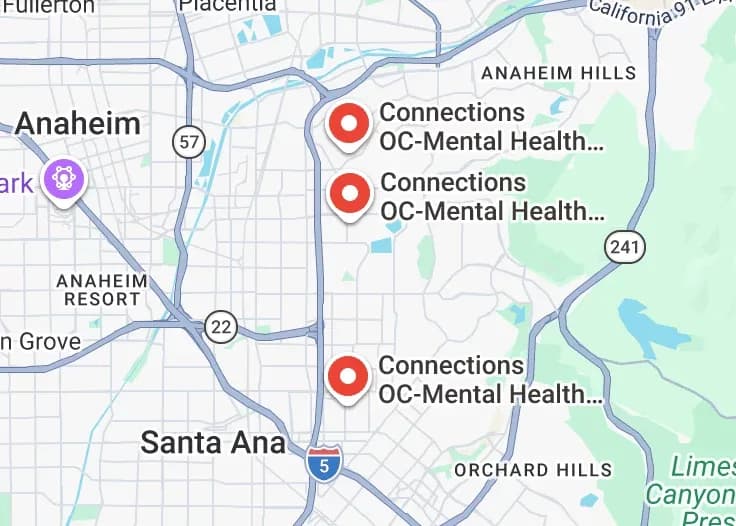
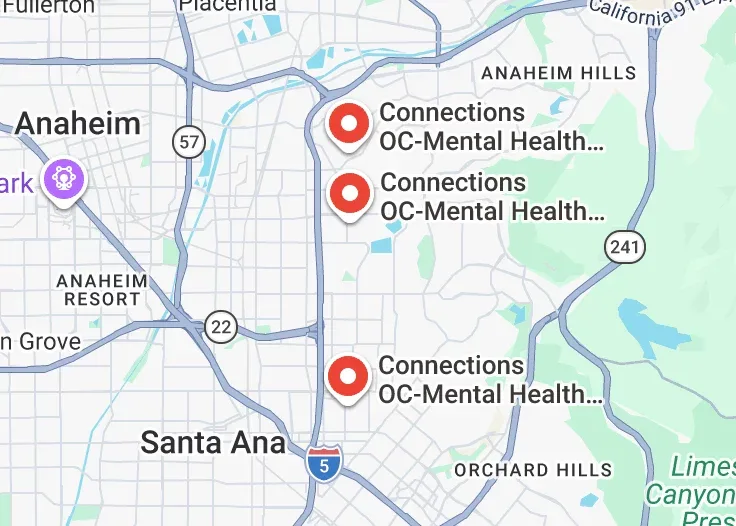
  • Orange County
    Tustin, CATustin, CAVilla Park, CAVilla Park, CAOrange, CAOrange, CA
    Location Preview
Tustin, CATustin, CAVilla Park, CAVilla Park, CAOrange, CAOrange, CA
Location Preview
Tustin, CATustin, CAVilla Park, CAVilla Park, CAOrange, CAOrange, CA
Location Preview
Areas We Serve

Why I should relocate for rehab?

Menu CTA Image
Mental Health Disorders
Anxiety Disorders
  • Generalized Anxiety Disorder
  • Panic Disorder Treatment (MentalHealth National)
  • Obsessive Compulsive Disorder
  • Social Anxiety Disorder
  • Agoraphobia
Mood Disorders
  • Depression Treatment (MentalHealth National)
  • Bipolar Disorder
  • Premenstrual Dysphoric Disorder
  • Disruptive Mood Dysregulation Disorder
  • Major Depressive Disorder
  • Persistent Depressive Disorder
  • Seasonal Affective Disorder
Trauma Disorders
  • Post Traumatic Stress Disorder
  • Adjustment Disorder
Personality Disorders
  • Borderline Personality Disorder
  • Antisocial Personality Disorder
  • Dissociative Identity Disorder
  • Histrionic Personality Disorder
  • Paranoid Personality Disorder
Psychotic Disorders
  • Schizophrenia
  • Schizoaffective Disorder
Neurodevelopment Disorder Treatment (MentalHealth National)
  • ADHD
Areas We Serve

Why I should relocate for rehab?

Menu CTA Image
Mental Health Treatment

Mental Health Treatment

Get dual-diagnosis treatment for SUD and mental health

888-255-2112
  • Cognitive Behavioral TherapyCognitive Behavioral Therapy
  • Dialectical Behavioral TherapyDialectical Behavioral Therapy
  • Seeking Safety TreatmentSeeking Safety Treatment
  • Motivational Interviewing Therapy (MentalHealth National)Motivational Interviewing Therapy (MentalHealth National)
  • Medication ManagementMedication Management
Areas We Serve

Why I should relocate for rehab?

Menu CTA Image
Contact
844-759-0999
Connections Mental Health
844-759-0999
Skip to content

5 Best Breathing Techniques for Anxiety

Picture of Written By:
Written By:

Matthew D'Ursov

Picture of Content Manager:
Content Manager:

Amy Leifeste

Picture of Editor:
Editor:

Karena Mathis

Posted On
April 29, 2024

Treatment Guidance Website Tour

After reading this current page, click on the next page we recommend here, or at the bottom of this page.

Stress and anxiety can adversely affect health in many different ways. However, various breathing techniques can induce a relaxation response, potentially making you feel more peaceful and grounded.

How Do Breathing Techniques Help with Anxiety?

Under stress, breathing patterns change. A person begins to hyperventilate, which means breathing excessively.

Typically, an adult breathes about 15 times per minute at rest. However, stress activates our fight or flight response, causing our breathing rate to increase. Since we’re not physically fleeing or confronting danger, the surplus oxygen doesn’t get used and accumulates in our bloodstream. This can lead to symptoms like dizziness, lightheadedness, numbness, and shortness of breath.

To counteract stress and enhance our mental health, employing breathing techniques to balance the gases in our bodies can be extremely effective. These methods are accessible to anyone, require minimal time, and aim to eliminate excess oxygen.

an image of someone demonstrating breathing technique for anxiety

Best Breathing Techniques for Anxiety

Here are 5 anxiety deep breathing techniques to try if you’re struggling with any type of anxiety disorder.

1)  4-7-8 technique

The 4-7-8 technique is perhaps the most common breathing technique for anxiety. Otherwise known as relaxing breath, this technique acts as a natural sedative for the CNS (central nervous system). Start by practicing this method sitting with your back straight. With more experience, you can perform this technique while lying down.

  • Put the tip of your tongue behind your upper front teeth throughout the exercise.
  • Fully exhale, making a whooshing sound.
  • Silently breathe in through your nose for 4 seconds.
  • Hold your breath for 7 seconds.
  • Exhale through your mouth, making a whooshing sound, for 8 seconds.

2) Resonance breathing

Resonance breathing, also known as coherent breathing, is effective for reducing anxiety and achieving a state of relaxation. Studies indicate that this breathing technique can positively affect anxiety, stress responses, and mood, including improvements in heart rate variability and blood pressure during stress.

  • Begin by closing your eyes and lying down.
  • Slowly breathe in through your nose for 6 seconds. Don’t overfill your lungs.
  • Exhale for 6 seconds.
  • Maintain this pattern for 10 minutes, focusing on how your body feels.

3) Diaphragmatic breathing

Originally recommended for COPD (chronic obstructive pulmonary disease), diaphragmatic breathing has been shown to also reduce stress.

  • Sit or lie down, putting one hand on your stomach and the other on your chest.
  • Breathe in through your nose, concentrating on raising your abdomen.
  • Purse your lips and exhale, focusing on lowering your abdomen.
  • Repeat this pattern.

4) Deep breathing

Deep breathing is straightforward and versatile technique, suitable while sitting, standing, or lying down.

  • Relax your stomach.
  • Put one hand below your ribs.
  • Breathe in deeply and slowly through your nose, feeling your hand rise.
  • Exhale through your mouth, observing your hand fall.

5) Belly breathing

Belly breathing is a well-supported technique for mitigating the negative effects of stress.

  • Begin in a seated or lying position.
  • Put one hand on your chest and the other hand below your ribcage on your stomach.
  • Breathe in slowly through your nose, directing the air to your abdomen, causing it to expand.
  • Purse your lips and exhale, feeling your stomach fall.
  • Notice the movement in your stomach rather than your chest and repeat the cycle several times for the best effect.

Breathing Techniques for Anxiety Attacks

In moments of heightened anxiety or during an anxiety attack, breathing exercises can be a powerful tool to regain control and soothe your nervous system. Here are some breathing techniques specifically tailored for anxiety attacks:

Square breathing

Square breathing, also known as box breathing, is a simple yet effective method to manage anxiety attacks. It involves equal lengths of inhalation, holding the breath, exhalation, and holding again, creating a square of breath movement.

  • Sit or stand in a comfortable position.
  • Slowly inhale through your nose for 4 seconds, filling your lungs with air.
  • Hold your breath for 4 seconds, maintaining a calm and steady posture.
  • Exhale slowly through your mouth for 4 seconds, releasing all the air from your lungs.
  • Hold your breath again for 4 seconds before starting the cycle over.
  • Repeat this process for a few minutes until you feel your anxiety lessen.

Paced breathing

Paced breathing helps slow down breathing rate, which can be particularly useful during an anxiety attack when breathing may become rapid and shallow.

  • Find a comfortable seated position with your back straight.
  • Inhale slowly and deeply through your nose for 5 seconds, focusing on filling your lungs fully.
  • Exhale slowly and completely through your mouth for 5 seconds, trying to expel all the air from your lungs.
  • Continue this pattern, gradually trying to extend the length of each inhalation and exhalation as you become more comfortable, aiming for 7 to 8 seconds per breath.

Grounding breath technique

This technique combines deep breathing with a grounding exercise, which can be especially beneficial during an anxiety attack by diverting your mind from distressing thoughts and focusing on the present.

  • Sit or lie down in a comfortable position. Close your eyes if it feels safe to do so.
  • Take a deep breath in through your nose for 4 seconds and feel the air entering your lungs.
  • Hold your breath for a moment, then exhale slowly through your mouth for 4 seconds.
  • As you breathe, focus on a specific object in your surroundings (if your eyes are open) or visualize a calming image (if your eyes are closed). Pay attention to its shape, color, texture, and any other details.
  • Continue breathing deeply and focusing on your chosen object or image for several minutes.

Implementing these techniques during moments of intense anxiety or panic can provide immediate relief and a sense of control. Practice these exercises regularly, not only during anxiety attacks but also as part of your daily routine, to improve their effectiveness and your overall well-being.

How to Get Professional Help for Anxiety

If you’re struggling with anxiety and find that self-help methods and breathing exercises aren’t enough, seek professional help.

First, consult your healthcare provider. Your physician can assess your symptoms, provide an initial diagnosis, and refer you to a mental health specialist if necessary. They can also discuss medication options if they believe these could help manage your symptoms.

Therapists and psychologists specialize in mental health and can offer various forms of therapy, such as CBT (cognitive behavioral therapy), which is highly effective for treating anxiety disorders. You can find a therapist through recommendations from your doctor, local mental health services, or reputable online directories.

If your anxiety is severe or complicated by other mental health issues, a psychiatrist can offer a comprehensive treatment approach, including medication management and therapy. This may take place in an inpatient mental health rehab to provide the most structured setting. As long as inpatient care is deemed medically necessary, treatment costs should be covered with health insurance.

Many organizations offer online resources, including self-help tools, counseling services, and support groups. These can be a good starting point if you’re not ready for face-to-face therapy or while waiting for an appointment.

If you’re experiencing a crisis or severe anxiety attack, don’t hesitate to contact emergency services or a crisis hotline. These services provide immediate support and can guide you to the help you need. Seeking help is a sign of strength, and professional support can provide you with the tools and strategies to manage your anxiety effectively and improve your quality of life. If you require immersive and structured support, here’s how you can get help right away.

inside connections mental health center | breathing techniques for anxiety

Get Effective Treatment for Anxiety Disorders at Connections

Anxiety disorders are one of the most common mental health conditions and are, thankfully, highly treatable.

Reach out to Connections Mental Health in Southern California for effective insurance-covered treatment in a safe, family-like environment.

When you choose inpatient treatment at our luxury beachside facility, you’ll join a small number of peers dealing with similar issues. The unique presentation of anxiety disorders means that treatment at Connections is highly personalized.

If you or a loved one need help overcoming a mental health disorder, call Connections at 844-759-0999.

PrevPrevious Post
Next PostNext

Related Articles

January 16, 2026

Does Insurance Cover Residential Mental Health Treatment?

October 7, 2025

Why Do I Feel Like Everyone Hates Me?

September 18, 2025

Overstimulated Meaning

Share This Article

Related Blogs

Check out our addiction recovery blog to learn more about substance use disorders and how to get effective treatment.

Best Residential Outpatient Rehab Mental Health Centers in the Country

Best Residential IOP Rehab Mental Health Centers in the Country

Best Residential DBT Therapy Mental Health Centers in the Country

Best Residential EMDR Therapy Mental Health Centers in the Country

Best Residential Group Addiction Therapy Mental Health Centers in the Country

ACT Therapy Treatment near Yorba Linda (Residential Mental Health Treatment Centers)

ACT Therapy Treatment near Westminster (Residential Mental Health Treatment Centers)

Villa Park ACT Therapy Treatment (Residential Mental Health Treatment Centers)

Tustin ACT Therapy Treatment (Residential Mental Health Treatment Centers)

ACT Therapy Treatment near Stanton (Residential Mental Health Treatment Centers)

ACT Therapy Treatment near Seal Beach (Residential Mental Health Treatment Centers)

ACT Therapy Treatment near Santa Ana (Residential Mental Health Treatment Centers)

ACT Therapy Treatment near San Juan Capistrano (Residential Mental Health Treatment Centers)

ACT Therapy Treatment near San Clemente (Residential Mental Health Treatment Centers)

ACT Therapy Treatment near Rancho Santa Margarita (Residential Mental Health Treatment Centers)

Featured Blogs

Does Insurance Cover Residential Mental Health Treatment?

What Is the Goal of Therapy?

Why Do I Feel Like Everyone Hates Me? Tips & What to Do

What Are Common Signs of Overstimulation in Adults?

What to Expect at an Inpatient Behavioral Health Hospital

Residential vs. Inpatient Mental Health Treatment

How to Admit Yourself to a Mental Hospital?

When To Seek Inpatient Mental Health Treatment At A Hospital

Inpatient Mental Health Crisis Treatment

How Long is Residential Mental Health Treatment?

What is Real Event OCD? Signs, Symptoms, and Treatment

What Is Harm OCD? Signs, Symptoms, and Treatment

Why Do I Zone Out So Much? Causes & What To Do

What is existential OCD: Signs, Symptoms, Triggers, & Treatment

Hyperfixation vs. Obsession: What’s the difference?

Am I Going Crazy? Understanding Your Mental Health Concerns

Are Your Nightmares Actually Trying to Warn You About Something?

What Is Obsessive Love Disorder? Symptoms, Causes, & Treatment

What Is Hyperfixations? How to Manage It

Obsessive-Compulsive Disorder: How Common Is OCD?

Rehabs near Orange County FAQs

What types of mental health programs are available in Orange County?

Mental health programs near Orange County offer a full continuum of care, including inpatient treatment, partial hospitalization (PHP), intensive outpatient (IOP), and standard outpatient (OP) services. Whether you’re looking for structured care or flexible support, mental health treatment programs are designed to meet a range of needs.

How do I know if I need mental health treatment near Orange County?

If you’re experiencing persistent feelings of anxiety, depression, stress, mood changes, difficulty coping with daily responsibilities, or emotional challenges that are affecting your work, relationships, or overall well-being, it may be time to seek professional support. A mental health assessment can help determine the level of care that’s right for you and connect you with the appropriate treatment options.

What mental health conditions are treated at Orange County mental health centers?

Mental health treatment centers in Orange County commonly provide care for conditions such as anxiety disorders, depression, bipolar disorder, PTSD, trauma-related disorders, OCD, mood disorders, and other emotional or behavioral health concerns. Treatment plans are personalized to each individual’s unique needs, goals, and clinical recommendations.

Will my insurance cover mental health treatment in Orange County?

Many major insurance providers offer coverage for mental health services, including partial hospitalization (PHP), intensive outpatient (IOP), and outpatient treatment programs. Coverage varies by plan, so verifying your benefits with the treatment center can help you understand your available options and any potential out-of-pocket costs.


Website Guide Progress...

What most patients want to know before they book

1Protect your job while you come to treatmentNEXT2Does Insurance Cover Residential Mental Health Treatment?NEXT3Why Traveling or Staying Close to home can both be great options.NEXT4Locations & GalleriesNEXT5Staff pageNEXT6ReviewsNEXT7What to bring to treatmentNEXT8Treatment & Therapies we provideNEXT9Admissions ProcessNEXT10Contact UsNEXT11Residential Inpatient vs Hospital InpatientNEXT

You’re Not Alone.

Get treatment from a team of expert staff who is passionate about helping you experience peace.

Call Now
an image of the Connections Mental Health logo

Tustin
DHCS # MHBL240478
Exp 1/10/27

Joint Commission HCO ID: 690880
Effective Date: 3/8/2025

Villa Park
DHCS #MHBL240509
Exp 9/4/26

Joint Commission HCO ID: 690880
Effective Date: 3/8/2025

Orange
DHCS #MHBT260570
Exp 4/8/27

Joint Commission HCO ID: 690880
Effective Date: 3/8/2025

  • 17811 Bigelow Park, Tustin, CA 92780
  • 17841 Lincoln St Villa Park, CA 92861
  • 2403 N Shady Forest Ln Orange, CA 92867
  • Privacy Policy
  • Sitemap
About Us

About Us

Effective residential inpatient mental health treatment.

Get to know us
Who We Are
  • Staff
  • Our Facilities
Resources
  • Blog
  • FAQ
  • Insurance Verification
  • Reviews
Areas We Serve

Why I should relocate for rehab?

Menu CTA Image
Locations

Locations

Choose from our beautiful locations near beaches & national parks.

888-255-2112
California
  • Orange County
    Tustin, CATustin, CAVilla Park, CAVilla Park, CAOrange, CAOrange, CA
    Location Preview
Tustin, CATustin, CAVilla Park, CAVilla Park, CAOrange, CAOrange, CA
Location Preview
Tustin, CATustin, CAVilla Park, CAVilla Park, CAOrange, CAOrange, CA
Location Preview
Areas We Serve

Why I should relocate for rehab?

Menu CTA Image
Mental Health Disorders
Anxiety Disorders
  • Generalized Anxiety Disorder
  • Panic Disorder Treatment (MentalHealth National)
  • Obsessive Compulsive Disorder
  • Social Anxiety Disorder
  • Agoraphobia
Mood Disorders
  • Depression Treatment (MentalHealth National)
  • Bipolar Disorder
  • Premenstrual Dysphoric Disorder
  • Disruptive Mood Dysregulation Disorder
  • Major Depressive Disorder
  • Persistent Depressive Disorder
  • Seasonal Affective Disorder
Trauma Disorders
  • Post Traumatic Stress Disorder
  • Adjustment Disorder
Personality Disorders
  • Borderline Personality Disorder
  • Antisocial Personality Disorder
  • Dissociative Identity Disorder
  • Histrionic Personality Disorder
  • Paranoid Personality Disorder
Psychotic Disorders
  • Schizophrenia
  • Schizoaffective Disorder
Neurodevelopment Disorder Treatment (MentalHealth National)
  • ADHD
Areas We Serve

Why I should relocate for rehab?

Menu CTA Image
Mental Health Treatment

Mental Health Treatment

Get dual-diagnosis treatment for SUD and mental health

888-255-2112
  • Cognitive Behavioral TherapyCognitive Behavioral Therapy
  • Dialectical Behavioral TherapyDialectical Behavioral Therapy
  • Seeking Safety TreatmentSeeking Safety Treatment
  • Motivational Interviewing Therapy (MentalHealth National)Motivational Interviewing Therapy (MentalHealth National)
  • Medication ManagementMedication Management
Areas We Serve

Why I should relocate for rehab?

Menu CTA Image
Contact
Verify Insurance
Call Now

Where Lasting Mental Health Treatment Truly Begins

Connect with our compassionate clinicians to get a personalized mental health treatment plan designed around your needs.
844-759-0999

Learn more about the individual mental health disorders we treat by clicking a button below.

Schizophrenia Disorder
Schizoaffective Disorder
Premenstrual Disphoric Disorder (PMDD)
Cyclothymia
Hypomania
Major Depressive Disorder (MDD)
Disruptive Mood Disregulation Disorder (DMDD)Disorder
Persistent Depressive Disorder (PDD)
ADHD
Social Anxiety Disorder
Major Depressive Disorder (MDD)
Disruptive Mood Disregulation Disorder (DMDD)Disorder
Persistent Depressive Disorder (PDD)
ADHD
Social Anxiety Disorder
Autism Spectrum Disorder (ASD)
Generalized Anxiety Disorder
Social Anxiety Disorder
Agoraphobia
Separation Anxiety Disorder
Dissociative Panic Disorder
Antisocial Personality Disorder
Paranoid Personality Disorder
Adjustment Disorder
Borderline Personality Disorder
USERJOURNEYGUIDE
Website GuideHand-picked pages that help our visitors
0 of 11 visited
  • 1Protect your job while you come to treatment+ Recommended next step
  • 2Does Insurance Cover Residential Mental Health Treatment?
  • 3Why Traveling or Staying Close to home can both be great options.
  • 4Locations & Galleries
  • 5Staff page
  • 6Reviews
  • 7What to bring to treatment
  • 8Treatment & Therapies we provide
  • 9Admissions Process
  • 10Contact Us
  • 11Residential Inpatient vs Hospital Inpatient